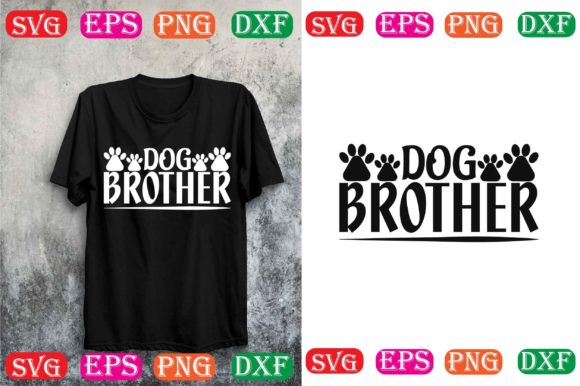
Dog Svg Design.dog Brother
A Friendly, Flexible Design That Feels Like a Real Companion
First glance at Dog Svg Design.dog Brother tells me this isn’t just another cartoon dog—it’s got warmth, subtle personality, and quiet confidence. The silhouette balances simplicity with character: rounded ears, soft curves in the body, and a gentle head tilt that reads as approachable, not cutesy. It doesn’t shout; it invites. That makes it ideal for handmade products where authenticity matters—think embroidered tote bags for a local pet boutique, baby onesies for a small Etsy shop, or kitchen towels for a holiday gift set. I recently tested it on a medium-weight cotton twill apron, and the shape held up beautifully without needing heavy editing. It didn’t fight the fabric—it settled into it.
Where This Design Truly Shines in Real Embroidery Projects
Dog Svg Design.dog Brother works especially well for custom apparel and soft goods where charm and clarity matter more than flash. On a lightweight crewneck sweatshirt? Yes—its clean outline translates cleanly in satin stitch, and the moderate detail level avoids thread buildup. On a linen tea towel? Perfect. The design’s open negative space lets the fabric breathe, and the proportions scale down gracefully without losing legibility. I also used it as an embroidered patch on denim—hooped with tear-away stabilizer and stitched in matte cotton thread—and it looked cohesive, not stiff.
For baby embroidery, it’s thoughtful: no sharp angles, no fussy details that snag or irritate delicate skin. As a nursery decor element (say, on a pillow cover or wall hanging), it adds gentle visual rhythm without overwhelming. And for holiday embroidery—like a “Dog Days of Christmas” mug rug or ornament—it carries warmth without leaning into seasonal clichés. Small business owners will appreciate how easily it integrates into branding: pair it with a clean sans-serif font for a boutique logo, or layer it subtly in a corner of a printable mockup for an Etsy listing.
Use With Care: Situations That Demand Extra Attention
This isn’t a one-size-fits-all machine embroidery design. On stretchy fabrics like jersey or thin knits, the outline can distort if hooping isn’t precise—always test on scrap first and consider a light cutaway stabilizer. Curved surfaces like caps require careful digitizing adjustments; Dog Svg Design.dog Brother wasn’t built for that out of the box, so expect to tweak placement and possibly reduce density near the crown seam. Tiny hoop sizes (under 4x4 inches) will limit how much detail you retain—especially in the facial area—so simplify or omit minor accents before stitching.
Dark fabric backgrounds demand attention to thread color contrast. A light tan or cream thread reads softly on navy, but gray or charcoal may disappear entirely. Likewise, dense fill stitch areas (like the dog’s torso, if expanded) can cause puckering on lightweight cotton or textured weaves—check stitch density in your embroidery software before finalizing. And while the design lends itself well to applique design workflows, avoid pairing it with overly busy background fabrics: its quiet confidence gets lost in visual noise.
What It Adds—And What It Doesn’t Promise
Dog Svg Design.dog Brother elevates handmade product appeal by feeling intentional, not generic. Customers notice when a design has presence—not just cuteness, but coherence. That builds trust, especially for personalized gifts or boutique merchandise where buyers pay a premium for thoughtfulness. It supports brand consistency because it’s adaptable: use it solo for minimalist impact, or nest it beside a short phrase (“Brother for Life,” “Best Friend Approved”) without crowding. Its balanced proportions also make it highly recognizable at small sizes—key for social media thumbnails or craft fair tags.
But let’s be clear: this isn’t a high-detail portrait or a technical showcase piece. It won’t replace a custom-drawn, multi-layered embroidery file for fine art pieces or competitive shows. It’s a reliable, versatile graphics asset—not a substitute for hand-digitized complexity. That’s its strength, not a limitation.
Practical Notes Every Embroidery Designer Should Run Through
- Test on scrap fabric first—especially if using textured, stretchy, or dark materials.
- Review thread color contrast in both natural and artificial light; what reads well on screen may fade on fabric.
- Check stitch density in fill areas—if it’s over 12,000 stitches per square inch, consider reducing density or switching to a lighter fill pattern.
- Confirm hoop size compatibility before committing to production runs—some versions may exceed standard 5x7 hoops.
- Inspect small details like ear contours or paw lines at 200% zoom—they’ll either stitch cleanly or need smoothing.
- Test black-and-white mockups to gauge silhouette strength without color distraction.
- Compare performance on light vs. dark fabric backgrounds—not just for visibility, but for perceived weight and warmth.
- Use proper stabilizer: medium-weight cutaway for knits, tear-away for stable wovens, and fusible for lightweight linens.
- Verify licensing terms before selling finished items or reselling digital files—dog brother EPS PNG SVG DXF formats suggest broad compatibility, but commercial rights aren’t implied.
Final Thought: A Design That Serves the Project, Not the Other Way Around
Dog Svg Design.dog Brother feels like a tool that knows its role: supportive, sincere, and quietly capable. It won’t distract from your craftsmanship—it’ll highlight it. Whether you’re an Etsy seller building a cohesive T-Shirt Designs collection, a craft fair vendor stitching personalized gifts, or a small shop owner sourcing embroidery file assets for seasonal merchandise, this design earns its place in your library by being easy to rely on. It’s not flashy. It doesn’t try too hard. And that’s exactly why it works so well in real life.