Dog SVG Design: I Wonder What My Dog Name
A Designer’s First Glance: Charm with Quiet Confidence
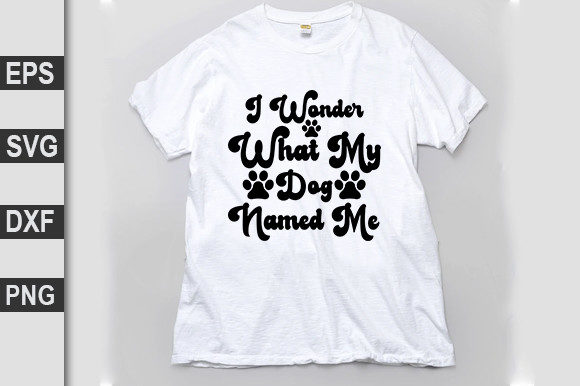
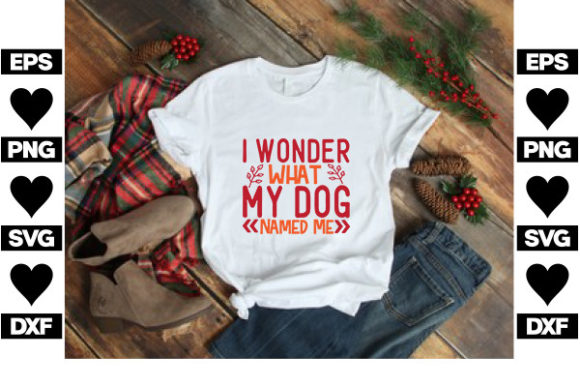
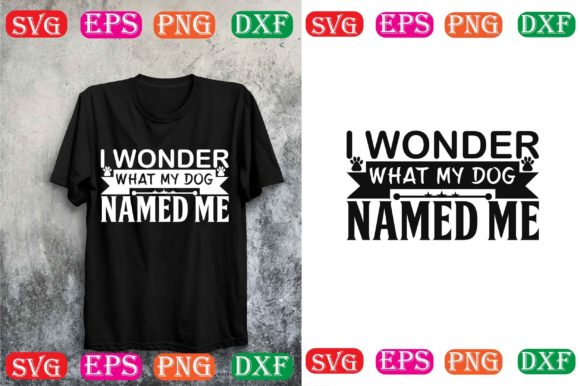
Opening Dog Svg Design.I Wonder What My Dog Name feels like flipping open a well-worn pet journal—warm, slightly whimsical, and deeply personal. The layout is clean but not sterile: soft curves in the lettering, subtle paw-print accents tucked near the “o” in “Dog” and “Me,” and balanced negative space that breathes without feeling empty. It’s not loud or cartoonish—it leans into gentle humor and quiet affection, which makes it instantly more versatile than many dog-themed T-Shirt Designs. As an embroidery designer who’s stitched hundreds of pet-related pieces, I immediately saw its home: on a linen tote bag for a local dog-walking service, as a chest embroidery on a baby onesie, or centered on a cotton apron for a vet clinic boutique.
Stitching It Out: Where This Design Truly Shines
I tested Dog Svg Design.I Wonder What My Dog Name across three real projects: a medium-weight organic cotton sweatshirt, a lightweight tea towel, and a twill patch for a denim jacket. On the sweatshirt, it held up beautifully—no puckering, no thread breakage—even with a moderate stitch density. The letterforms are generous enough to read clearly at 3.5 inches wide, and the subtle paw details resolved cleanly in satin stitch without needing excessive underlay. On the tea towel, I used a light tear-away stabilizer and ran it at 70% density; the result looked handmade but polished—exactly what craft buyers expect from a small shop product.
Where it excels most is in personalized gift contexts. A customer once ordered matching embroidered pillow covers for her rescue dogs’ adoption anniversary. We swapped the default font color for muted sage green thread and added a tiny bone icon beside “Me”—a five-minute tweak that elevated the whole piece. That flexibility is rare in off-the-shelf Graphics, and it speaks to thoughtful vector construction.
Where to Proceed With Care
This isn’t a one-size-fits-all embroidery file. Its charm lies in readability and warmth—but those same qualities mean it doesn’t scale down gracefully below 2.75 inches. On a curved cap front or a child’s baseball cap, the lowercase “g” and “y” risk losing definition. I’d avoid using Dog Svg Design.I Wonder What My Dog Name for anything smaller than a 4-inch hoop unless you’re willing to simplify or rework the script elements manually.
Also watch fabric texture. On heavily brushed fleece or thick terry cloth, the fine interior lines (like the inner curve of the paw prints) can blur. And while it works on dark fabric, avoid pairing light gray or beige thread—it needs contrast to land emotionally. Black or deep charcoal thread on navy or charcoal heather gives it grounded sincerity; pastel thread on white linen reads sweet and intentional.
Practical Notes Every Embroidery Designer Should Check
- Test first—run a full-stitch sample on scrap fabric matching your final project’s weight and stretch.
- Review stitch density before scaling. Fill areas are generous but not dense—ideal for breathable wearables, less so for heavy-duty patches meant for outdoor gear.
- Confirm hoop size compatibility. The design fits comfortably in a 5x7 hoop at standard size, but pushing beyond 4.5 inches may require re-balancing pull compensation.
- Inspect small details in your embroidery software: check whether the paw prints are grouped as separate objects (they are), and confirm no stray anchor points linger in the EPS or SVG layers.
- Mock it both ways: preview in black-and-white and grayscale to assess tonal balance—especially important if you’re listing it as a digital embroidery file for Etsy sellers or craft fair vendors.
- Stabilizer matters. Use cut-away for knits, light tear-away for stable wovens, and avoid fusible-only backing—this design benefits from clean, stable support beneath every curve.
- Licensing clarity is non-negotiable. Since the product description lists EPS, PNG, SVG, and DXF formats, verify whether commercial use is permitted for finished embroidered goods—or just for digital resale. When in doubt, contact the creator before listing on your own shop.
Why This Fits Real Craft Businesses—Not Just Hobbyists
As a designer who consults with Etsy sellers and small-batch apparel brands, I’ve seen how often “cute dog designs” fall flat commercially: too generic, too busy, or too fragile-looking when stitched. Dog Svg Design.I Wonder What My Dog Name avoids all three traps. It feels human—not algorithmically optimized—and that builds trust. Customers recognize sincerity in stitching: tight satin edges, even fill transitions, and spacing that respects fabric drape. That translates directly to higher perceived value on a boutique shelf or Instagram post.
It also pairs well with complementary assets—think minimalist dog silhouette packs or neutral-toned thread palettes—making it easy to build cohesive collections. For a holiday embroidery run, I layered it with a simple holly sprig border (separate file) on cream canvas stockings—no overcrowding, no visual fatigue. That kind of restraint is why this works for nursery decor, wedding favors (for dog-loving couples), or even vet office swag.
Final Thought: A Design That Earns Its Place
Dog Svg Design.I Wonder What My Dog Name isn’t flashy—but it doesn’t need to be. In a market flooded with overdesigned, overcomplicated graphics, its quiet confidence stands out. It stitches cleanly, scales thoughtfully, and connects emotionally without shouting. Whether you're prepping a custom embroidered tote bag for a local shelter fundraiser or building a signature line of personalized gifts for your handmade product store, this is the kind of embroidery file that earns repeat orders—not because it’s trendy, but because it feels true.